

Hypnosis has a reputation problem. Stage shows and movies make it look like something one person does to another, with the subject losing control and doing strange things on command. In my sessions, clients retain some level of awareness the whole time. They hear my voice, they usually remember what they said, and they can stop whenever they choose.
As renowned hypnotherapist Dolores Cannon often said: all hypnosis is self-hypnosis. A practitioner guides you, but your own mind is what does the work. This means you can learn to reach a relaxed, focused state on your own, in your home, with nothing more than a quiet space and a few minutes of intentional focus.
What It Feels Like
Most people expect to feel “under,” as if a switch will flip. What usually happens is quieter than that. Your body gets heavy, your thoughts slow down, and you can still hear the dog barking down the street. Many people compare it to the drift right before sleep.
If you find yourself wondering whether it’s working, that’s normal. Wondering doesn’t break the state.
Setting Up for Self-Hypnosis at Home
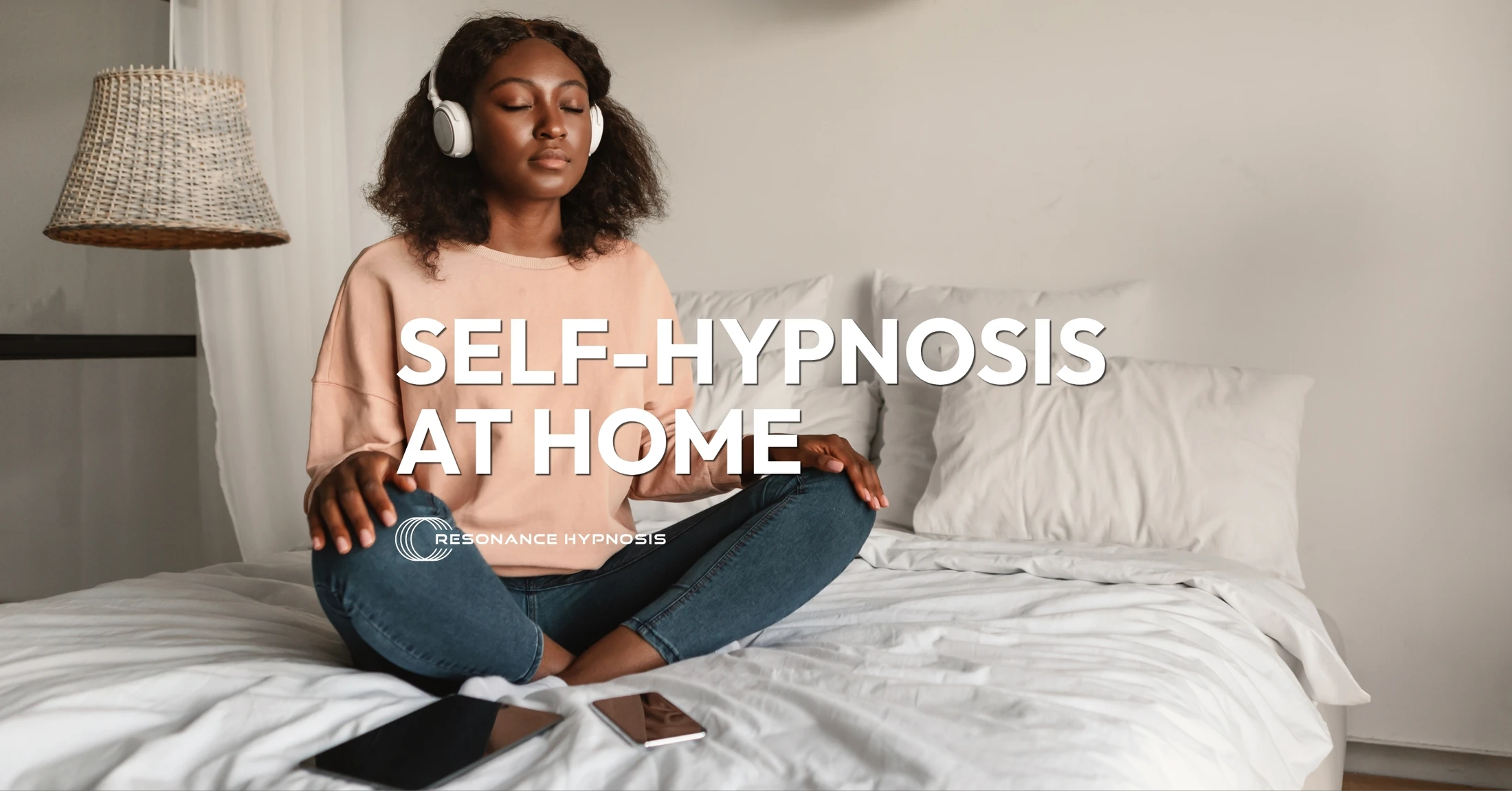
Choose a time when no one will interrupt you for 15 to 20 minutes. A comfortable chair or sofa works better than your bed if you tend to fall asleep. Put your phone on Do Not Disturb.
Never practice while driving or doing anything that needs your attention.
Before you begin, decide on one suggestion. Keep it short, in the present tense, and phrased around what you want instead of what you don’t. “I fall asleep easily” works better than “I don’t lie awake.” “I stay calm when I speak up in meetings” is another example. Write it down so you don’t have to think about it later.
A Simple Practice, Step by Step
- Settle your eyes. Pick a spot on the wall slightly above eye level and rest your gaze there. Breathe slowly. As your eyelids get heavy, let them close.
- Relax your body from the top down. Bring your attention to your forehead and let it soften. Move to your jaw, your shoulders, your arms, and keep going down to your feet. There’s no rush.
- Deepen with a count. Silently count down from 10 to 1, slowly. With each number, tell yourself you’re drifting a little deeper.
- Repeat your suggestion. Say it to yourself several times, unhurried. Let it feel true. You don’t need to force it.
- Come back up. Count from 1 to 5 and tell yourself you’ll return feeling alert and rested. Open your eyes on 5, then stretch before you stand.
You Don’t Need to See Anything
A lot of self-hypnosis scripts ask you to picture a staircase or a beach. If images don’t come for you, nothing is wrong. Hypnosis runs on attention and feeling. You can focus on the weight of your hands in your lap, the temperature of the air on your skin, or the sound of your own count. People who don’t think in pictures reach deep, useful states all the time.
Making Self-Hypnosis at Home a Habit
This is a skill, and it improves with repetition. Your first few tries may feel like sitting in a chair with your eyes closed. After a week or two of daily practice, most people notice they drop in faster and stay longer.
If it’s easier, record yourself reading the steps aloud and play it back. Stick with the same suggestion for at least two weeks before you change it, so it has time to settle in.
Where Self-Hypnosis Ends and QHHT Begins
Self-hypnosis is a good everyday tool for sleep, stress, and habits you want to shift. A QHHT session goes much further. It’s a longer session, usually several hours, where I guide you into a deeper level of trance than most people reach alone and ask questions on your behalf. Clients often come away with insight into patterns in their lives that they couldn’t see from the surface.
If you’re curious about that kind of work, I offer QHHT sessions in Marietta, GA. Until then, give the practice above a try tonight.