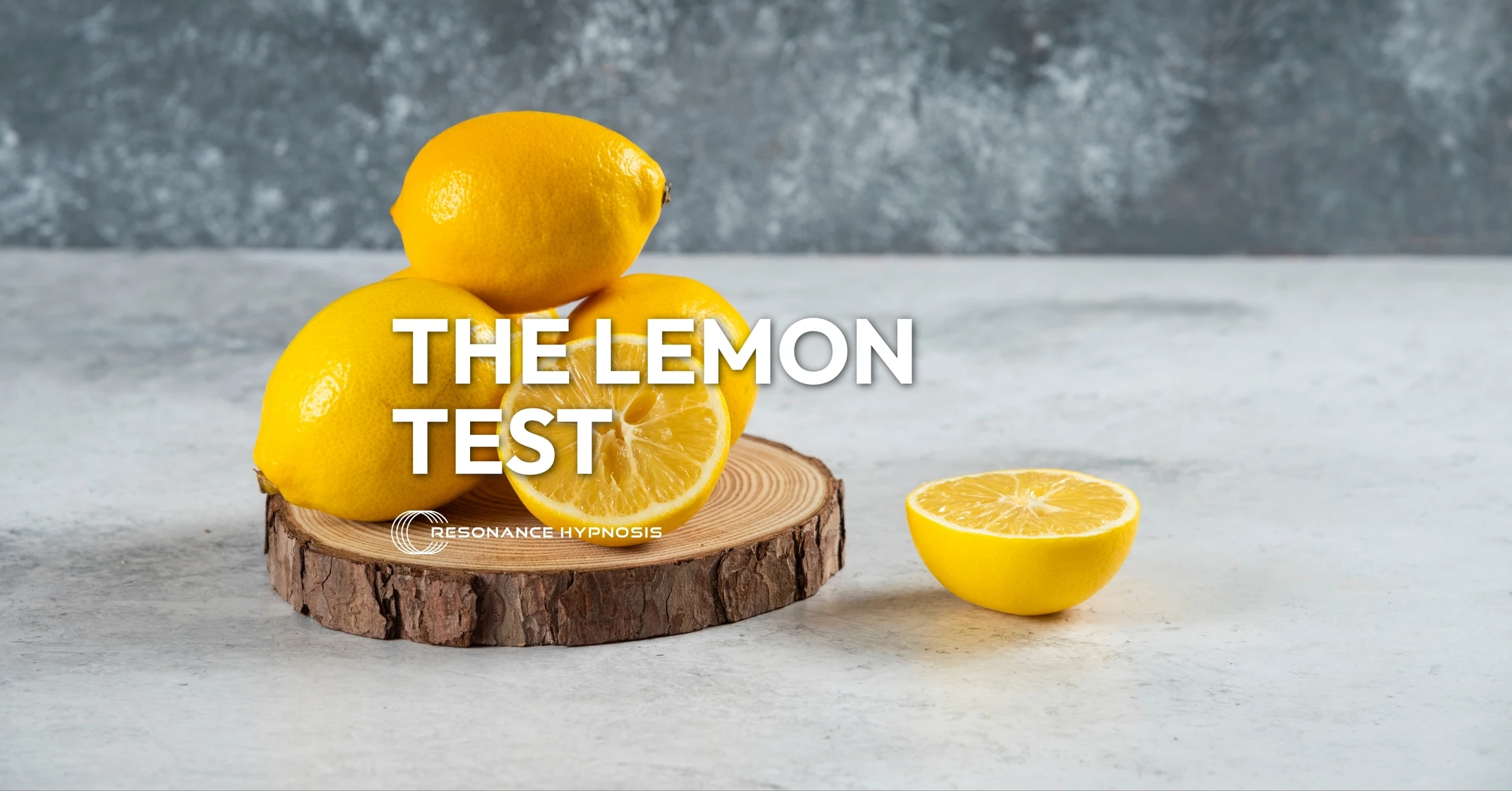


Before a hypnosis session, practitioners sometimes run a few quick exercises called suggestibility tests. They give a rough sense of how readily someone’s mind and body respond to suggestion. One of the oldest and easiest is the lemon test, and you can try it right now.
I like this one because it does more than measure. It gently turns your attention inward and shows you how your own imagination works, which is useful whether or not you ever book a session.
How to Do the Lemon Test
Find a comfortable seat and close your eyes. Take a few slow breaths and let your shoulders drop. Then read through the steps below once, or have someone read them to you slowly.
Imagine you’re standing in your kitchen. On the counter in front of you is a lemon. Reach out and pick it up. Notice its weight in your palm, the cool, waxy skin, the little bumps under your fingertips.
Now set it on a cutting board and slice it in half. Hear the knife go through. Notice the juice running onto the board and the sharp, bright smell rising up.
Pick up one half. Bring it close to your face and breathe in. Then bite into it. Let the sour juice flood your mouth.
Open your eyes and notice what happened.
What Your Response Tells You
Most people notice their mouth watering, sometimes a lot. Some wince or pucker without meaning to. That’s your body reacting to an event that only happened in your imagination, and it’s a small preview of how hypnosis works. A suggestion lands, and the body follows.
Pay attention to which senses showed up for you. Maybe the smell was vivid but you couldn’t picture the lemon at all. Maybe you felt the weight of it in your hand and the sting on your tongue, but heard nothing. Your inner world has its own preferred channels, and the lemon test is a good way to find out what yours are.
If very little happened, that’s useful information too. It doesn’t mean hypnosis won’t work for you.
Is the Lemon Test Hypnosis Predictive?
Somewhat. People who respond strongly to imagined sensations often go deeper in hypnosis, especially in early sessions. Still, it’s a rough indicator. How relaxed you are, how much you trust the person guiding you, and how many times you’ve practiced can all change your response.
Suggestibility is also something you can develop. People who barely notice the lemon the first time often get a stronger reaction after a few weeks of self-hypnosis or regular body awareness practice.
You Don’t Have to See the Lemon
This test is a good reminder that imagination is more than pictures. Plenty of people don’t visualize at all, and their mouths still water when they “bite” the lemon. Hypnosis works with whatever senses you have available. Taste, smell, touch, and the felt sense of your own body are just as valid as images, and for some people they’re far stronger.
When I work with clients, I pay attention to these differences so I can guide them through the senses that come most naturally.
Using the Lemon Test Hypnosis Exercise as a Practice
If you’re working on practicing self-hypnosis at home, try repeating the lemon test once a day for a week. Each time, slow down a little more. Spend longer with the weight of it in your hand, or the smell before you bite. Notice where your attention wants to go and where it drifts away.
You’ll start to recognize what it feels like when your awareness settles into your body. That shift is the same doorway hypnosis uses, and getting familiar with it makes deeper work easier later.
If you’re curious about going further, I offer QHHT sessions in Marietta, GA, where we work with that inner awareness in a much deeper state.